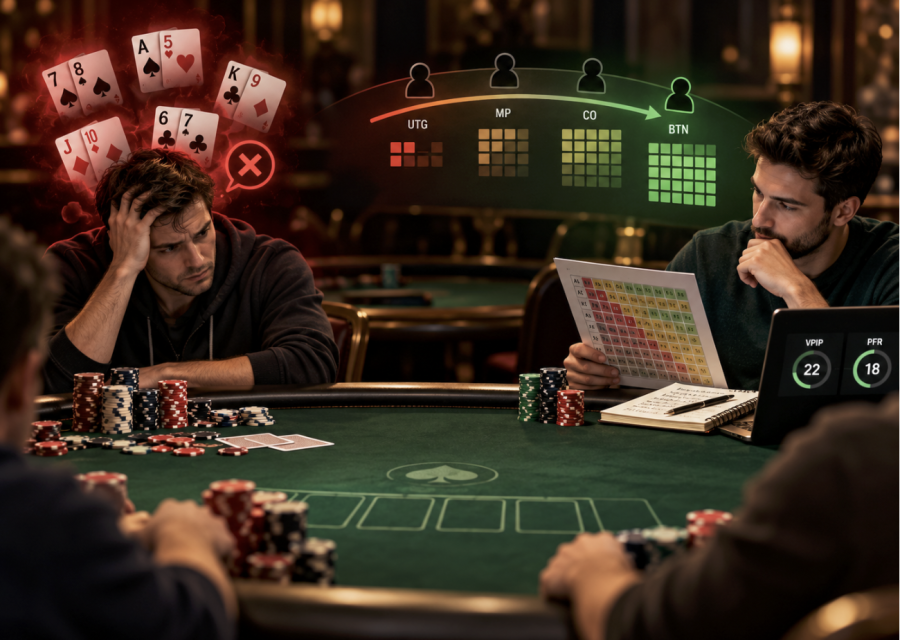

Most modern fields of quantitative thinking — probability theory, statistics, decision theory, financial mathematics — owe a substantial debt to a peculiar source: gambling. The very questions that seventeenth-century gamblers asked their mathematician friends forced the development of new tools that today underpin insurance pricing, climate modelling, artificial intelligence and quantum mechanics. The line from a dice-table dispute in 1654 to the algorithms running modern data centres is, surprisingly, unbroken.
The 1654 Letters That Changed Mathematics
In the summer of 1654, the French mathematician Blaise Pascal exchanged a series of letters with Pierre de Fermat about a problem posed by an aristocrat named Chevalier de Méré: if a game of chance is interrupted before it ends, how should the stakes be divided fairly? The "problem of points," as it became known, had baffled mathematicians for centuries. Pascal and Fermat's solution — built around the concept of expected value — laid the formal foundations of probability theory.
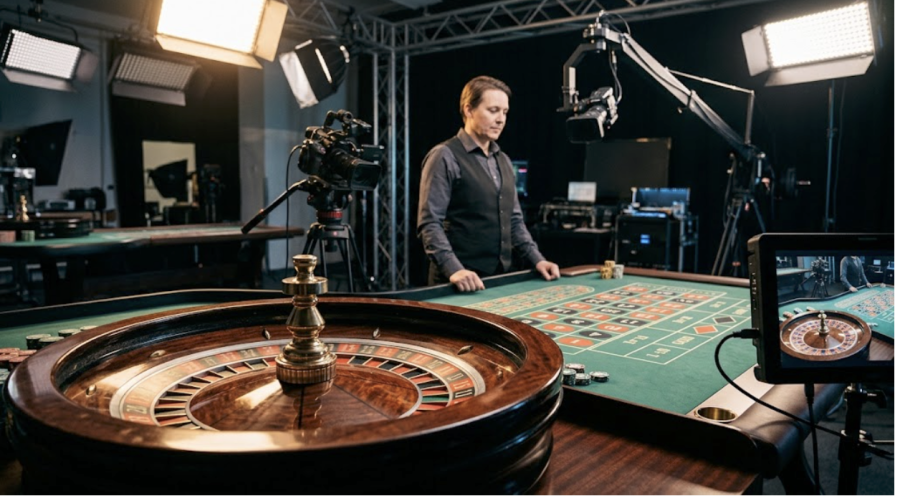
That same mathematical framework remains in active operation today, almost 370 years later. Every spin of a roulette wheel at platforms such as Lucky Star Casino, every hand of blackjack and every slot outcome is governed by the same expected-value calculations that Pascal and Fermat sketched in their correspondence. The continuity is striking: a piece of theoretical mathematics born from a gambler's question continues to define an entire industry several centuries later.
From Pascal to Bernoulli: Probability Becomes a Science
The work begun by Pascal and Fermat was expanded by Christiaan Huygens, whose 1657 treatise De Ratiociniis in Ludo Aleae — "On Reasoning in Games of Chance" — was the first published textbook on probability. A few decades later, Jacob Bernoulli proved what is now called the Law of Large Numbers: as the number of trials increases, the observed frequency of an outcome converges on its theoretical probability.
This single insight is what allows insurance companies to price policies, polling firms to predict elections, and casinos to know with mathematical certainty that they will profit over the long run. By the eighteenth century, Pierre-Simon Laplace had formalised probability into a complete mathematical system, and by the nineteenth, statisticians were using it to analyse everything from epidemiology to astronomical observations. Each step out of the casino opened a new field of scientific inquiry.
Modern Echoes: Game Theory, Behavioural Economics and AI
The intellectual thread that began at the gaming table runs through some of the twentieth century's most influential ideas. John von Neumann and Oskar Morgenstern's Theory of Games and Economic Behavior (1944) built the foundations of game theory using examples drawn directly from poker. Daniel Kahneman and Amos Tversky's prospect theory, recognised with the Nobel Prize in Economics in 2002, was developed by studying how people make irrational decisions under risk — and casino behaviour provided much of their early data.
Today, the Monte Carlo methods used to train deep neural networks and to model financial derivatives are direct descendants of techniques first formalised to analyse roulette and dice outcomes. Even reinforcement learning, the AI paradigm behind modern game-playing systems like DeepMind's AlphaGo, traces its roots to expected-value frameworks pioneered three and a half centuries ago.
A Final Thought
Mathematics rarely advances in a straight line. Sometimes a single curious question, asked in a seventeenth-century French salon over a game of dice, opens up centuries of discovery. The science of risk, decision and uncertainty was born at the gambling table — and remains, in its purest form, very much alive there. For modern readers, the practical reminder is that the underlying mathematics is impersonal: it works the same way whether the player is winning, losing, or simply observing.