
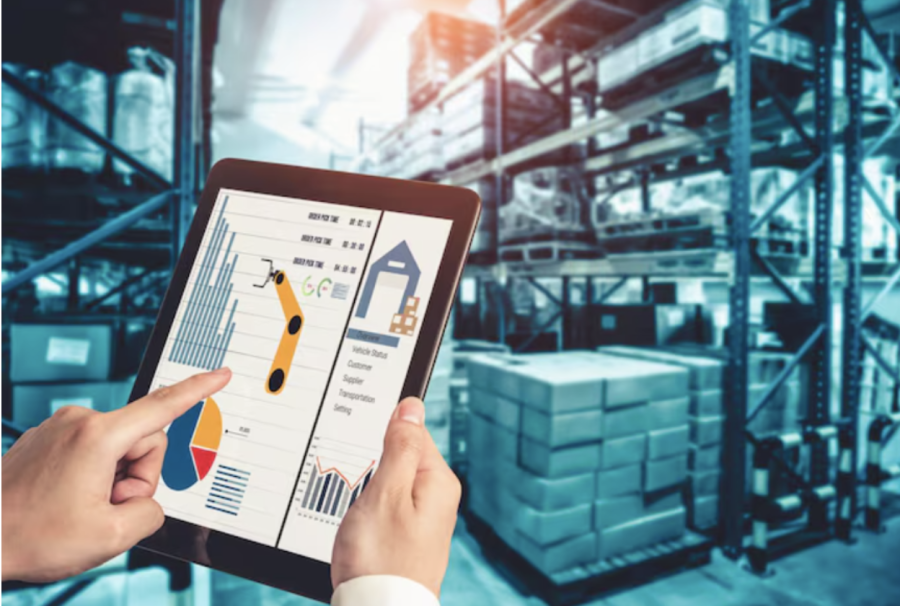
Manufacturing ERP software is designed to help manufacturers manage day-to-day operations using a single, connected system. It brings together planning, production, inventory, labor, costing, and financial data so teams can work with consistent information across the business.
For many manufacturers, ERP replaces a mix of spreadsheets, accounting tools, and disconnected systems that make it difficult to track work accurately.
Instead of managing processes in isolation, ERP helps coordinate how work flows from order entry through production and invoicing.
This article explains what manufacturing ERP software is, how it works, and which types of manufacturers benefit most from using it.
What Is Manufacturing ERP Software?
Manufacturing ERP (Enterprise Resource Planning) software is a system built specifically to support manufacturing operations. It integrates core business functions into a single platform, allowing data to flow across departments without manual re-entry.
At a basic level, manufacturing ERP helps manage:
Jobs and work orders
Production scheduling
Inventory and materials
Labor and time tracking
Job costing and reporting
Purchasing and invoicing
Unlike generic business systems, manufacturing ERP is designed around production workflows. It understands routings, operations, capacity constraints, and the relationship between materials, labor, and machines.
Many manufacturers adopt ERP to replace disconnected tools with integrated manufacturing software that reflects how work actually happens on the shop floor.
How Manufacturing ERP Software Works
Manufacturing ERP software works by connecting data across each stage of the production process. Instead of information being entered and stored separately, data is shared across modules.
For example:
A quote becomes a job
A job drives material requirements
Materials affect scheduling
Labor time updates job costs
Completed jobs feed invoicing and reporting
Core Functions of Manufacturing ERP Software
While ERP systems vary by vendor, most manufacturing ERP platforms include several core functions.
Job and Work Order Management
ERP systems allow manufacturers to create, track, and manage jobs from start to finish. Work orders include routing steps, required materials, labor standards, and due dates.
Production Scheduling and Capacity Planning
Scheduling tools help manufacturers plan work based on available machines and labor. ERP scheduling considers:
Routing times
Work center capacity
Job priorities
Due dates
Inventory and Material Management
Manufacturing ERP tracks raw materials, work-in-progress, and finished goods. Inventory is linked directly to jobs and schedules, allowing teams to see what is available and what needs to be purchased.
This reduces shortages and prevents jobs from starting without required materials.
Labor Tracking and Job Costing
ERP systems capture labor time by job and operation. This data feeds into job costing, allowing manufacturers to see actual costs compared to estimates.
Teams using manufacturing erp software benefit from improved cost visibility and more accurate quoting over time.
Reporting and Visibility
ERP reporting provides insight into production performance, costs, inventory levels, and delivery metrics. Because data comes from a single system, reports are consistent and up to date.
Managers can review performance regularly without manually compiling data from multiple sources.
Who Is Manufacturing ERP Software For?
Manufacturing ERP software is not limited to large enterprises. It is widely used by small and mid-sized manufacturers that need better control over operations.
Below are the types of manufacturers that typically benefit most.
Job Shops and Custom Manufacturers
Job shops often manage a high mix of custom work, each with different routings, materials, and timelines. This complexity makes manual tracking difficult.
ERP helps job shops by:
Managing unique jobs efficiently
Tracking actual labor and material costs
Improving scheduling accuracy
Supporting repeat work with historical data
For custom manufacturers, ERP provides the structure needed to manage variability without adding excessive administrative effort.
Make-to-Order and Engineer-to-Order Manufacturers
Manufacturers that build products after receiving orders need flexibility and control. Design changes, customer requests, and variable lead times are common.
ERP supports these environments by:
Linking quotes to jobs
Managing engineering changes
Updating schedules and costs dynamically
Providing visibility across departments
Small and Mid-Sized Manufacturers
Many small and mid-sized manufacturers rely on spreadsheets and basic accounting systems. As order volume grows, these tools become difficult to manage.
ERP helps growing manufacturers by:
Reducing manual data entry
Improving coordination across teams
Providing real-time operational visibility
Supporting scalable processes
ERP allows smaller teams to manage complexity without increasing overhead.
Manufacturers With Multiple Departments or Locations
As organizations grow, communication becomes more challenging. Disconnected systems often lead to inconsistent data and misunderstandings.
Manufacturing ERP provides a shared system where:
Production, purchasing, and finance work from the same data
Changes are visible across departments
Reporting is consistent
For distributed teams, cloud erp solutions allow authorized users to access the system from different locations while maintaining data integrity.
Who Manufacturing ERP Software May Not Be For
While manufacturing erp software offers many benefits, it is not always the right fit for every organization.
Manufacturing ERP may not be ideal for:
Very small operations with minimal production complexity
Businesses with limited production tracking needs
Companies not ready to standardize processes
ERP delivers the most value when organizations are prepared to define workflows and use the system consistently.
Common Misconceptions About Manufacturing ERP
“ERP Is Only for Large Companies”
ERP is widely used by small and mid-sized manufacturers. Modern systems are designed to scale and can be implemented in phases.
“ERP Replaces All Existing Processes”
ERP supports processes, but it does not eliminate the need for good operational discipline. Success depends on how well teams use the system.
“ERP Is Only for Accounting”
While ERP includes financial functions, its primary value in manufacturing comes from production planning, tracking, and visibility.
What to Consider Before Choosing Manufacturing ERP Software
Before implementing ERP, manufacturers should consider:
Current pain points and process gaps
Production complexity and variability
Reporting and visibility needs
Internal resources and readiness
Choosing ERP is as much about organizational alignment as it is about software features.
How Manufacturing ERP Supports Long-Term Improvement
Over time, manufacturing ERP helps organizations improve by:
Providing historical performance data
Identifying inefficiencies
Supporting continuous improvement efforts
Improving decision-making accuracy
As data accumulates, teams gain better insight into costs, lead times, and capacity.
Final Thoughts
Manufacturing ERP software is designed to help manufacturers manage work in a structured, connected way. By integrating planning, production, inventory, labor, and costing, ERP reduces manual effort and improves visibility across operations.