
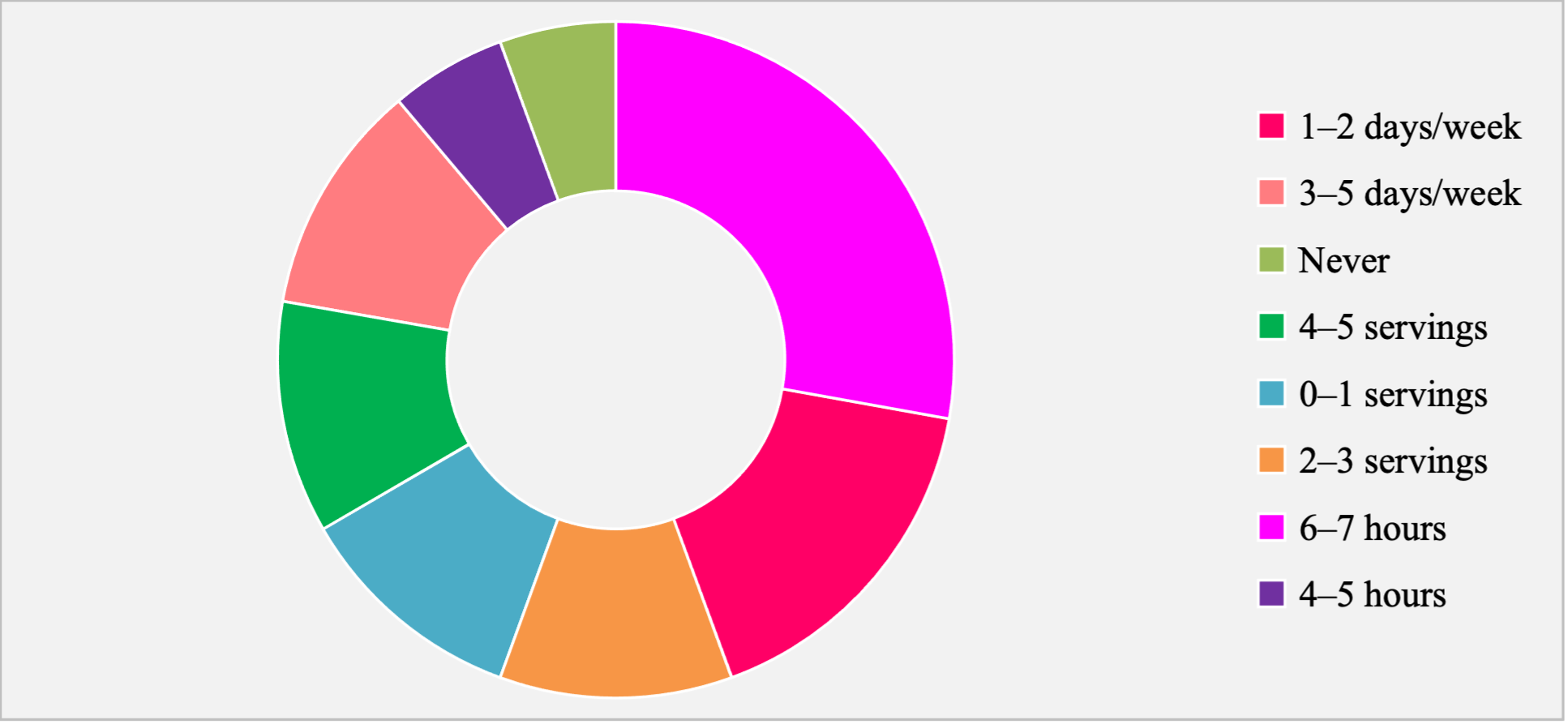
Obesity remains a major public health challenge shaped by interacting behavioral, psychosocial, and lifestyle factors that are frequently assessed in isolation, limiting the identification of clustered risk patterns relevant for prevention. This quantitative study developed and evaluated a concise, multidomain survey instrument to capture interconnected, modifiable behaviors associated with adult obesity while emphasizing usability and participant-centered design. Using a cross-sectional approach, primary data were collected through pilot administration of the Adult Obesity Risk Assessment Questionnaire among adults in the United States and interpreted alongside publicly available national behavioral surveillance data for contextual comparison. The instrument assessed physical activity, dietary intake, sleep duration, perceived stress, screen exposure, substance use, and health-monitoring behaviors and demonstrated strong feasibility, complete response capture, and good internal reliability. Findings indicated that 40% of participants engaged in physical activity only 1–2 days per week, while 20% reported no regular physical activity. Mean fruit and vegetable intake was 2.6 servings per day, average sleep duration was 6.3 hours per night, and mean daily screen time was 5.8 hours. Perceived stress levels were moderate to high, with a mean score of 3.2 on a five-point scale. Alcohol use was reported by 70% of participants, whereas tobacco use was infrequent at 15%. Behavioral clustering was evident, particularly among physical inactivity, prolonged screen exposure, and elevated stress, mirroring patterns observed in national obesity surveillance. These results underscore the importance of integrated behavioral assessment and support the utility of this instrument for behavioral risk surveillance, targeted intervention planning, and data-driven obesity prevention efforts.
Keywords: Adult obesity; Behavioral and Lifestyle factors; Psychosocial stress; Quantitative study; United States